In this episode, we explore what AI means for nonprofit leadership—what’s changing, what isn’t, and where human judgment, storytelling, and relationships still matter most.
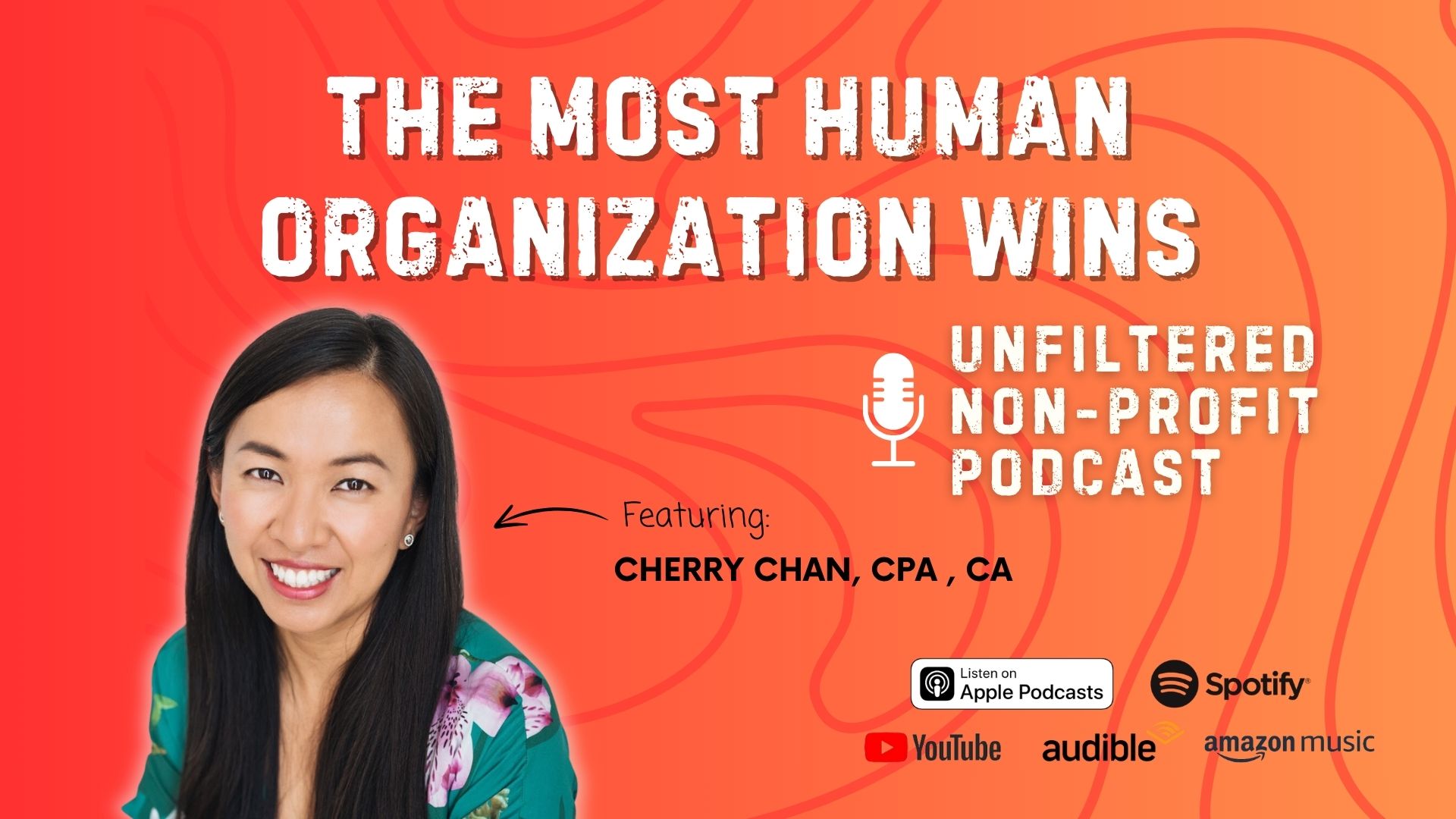
Recorded from our ONE event, Cherry Chan shares a grounded perspective on how AI is showing up inside nonprofit organizations today. This isn’t about tools or trends—it’s about how leaders are navigating uncertainty, building capacity, and deciding what work actually matters moving forward. If you’ve been thinking about AI (or feeling the pressure to keep up), this conversation brings it back to what’s real.
She started with a moment many of us can relate to. After watching a presentation about AI agents building websites, writing copy, and handling communications, her 12‑year‑old daughter turned to her and asked: “If AI is doing all of this… what am I going to do in the future?”
It’s a simple question—but one that captures the unease many people are feeling right now.
And Cherry was honest. She didn’t have a perfect answer. Because none of us do.
But what she shared next reframed the conversation.
AI isn’t here to replace us. It’s here to change how we work.
In her world—leading a growing organization with a team of 20–40 people—she’s already seeing where AI fits. It can handle repetitive tasks, streamline workflows, and take care of the back-and-forth that slows teams down. In finance, that might look like automating approvals or processing data. In marketing and communications, it might mean drafting proposals, analyzing data, or building campaigns faster.
In fact, at OTUS, team members are already experimenting with this—building their own AI agents to support proposals, communications, and operations.
The shift isn’t about removal. It’s about multiplication.
Leaders won’t just manage people—they’ll lead teams of both humans and intelligent tools. The capacity of one role can expand dramatically.
But—and this is the critical point—AI has limits.
And those limits define where human work becomes more important, not less.
Cherry highlighted three capabilities that will not be replaced:
First, judgment.
AI can process data, but it can’t understand context the way people do. It can’t make nuanced decisions in complex, messy, real-world situations. That responsibility still sits with leaders and teams.
Second, storytelling.
Nonprofits are already strong here—and it’s one of their greatest advantages. Data alone doesn’t move people. Stories do.
She shared examples of leaders who bring deeply technical or complex topics to life—not through perfect scripts, but through passion and conviction. Whether it’s explaining wastewater systems or sharing personal experiences in fundraising, the impact comes from authenticity—something AI can support, but never replicate.
And third, relationships.
Behind every report, every funding application, every set of numbers—there’s another human being on the receiving end.
AI can help prepare the report. It can organize the data. But it can’t build trust.
Cherry shared how organizations that go beyond the spreadsheet—inviting funders to see the work firsthand, creating real moments of connection—build stronger, more sustainable partnerships. That human connection is what keeps the work moving forward.
Taken together, these aren’t new skills for the nonprofit sector.
In many ways, they’re the foundation of the sector.
And that’s why her message landed so clearly:
We’re not behind. We’re not being replaced. And we’re not too late.
Yes, AI will change how work gets done—but not overnight, and not in the way headlines often suggest. The opportunity right now is to learn, experiment, and adopt these tools in ways that expand impact—not replace people.
For leaders, that also means something deeper.
In moments of uncertainty, teams don’t need perfect answers. They need reassurance. They need clarity. They need leaders who show up honestly and create space for both curiosity and concern.
Because ultimately, the organizations that thrive won’t be the ones that adopt the most technology.
They’ll be the ones that stay the most human.
Listen below
iTunes: https://podcasts.apple.com/us/podcast/the-unfiltered-non-profit-leaders-share-it-all/id1749147957
Spotify: https://open.spotify.com/episode/2WWo0Z3gBCRriDr8g172SU?si=sR0LTaV6QpGo5Wo3NqaGmQ
Amazon Music: https://music.amazon.com/podcasts/247b628f-f9df-42eb-84ef-ae1471ae24e3/the-unfiltered-non-profit-leaders-share-it-all
Audible: https://www.audible.ca/podcast/The-Unfiltered-Non-Profit-Leaders-Share-It-All/B0D5JP698Z
Youtube: https://youtu.be/to_pX4kLXiE